The New Soma
More Americans now use marijuana daily or near-daily than drink alcohol
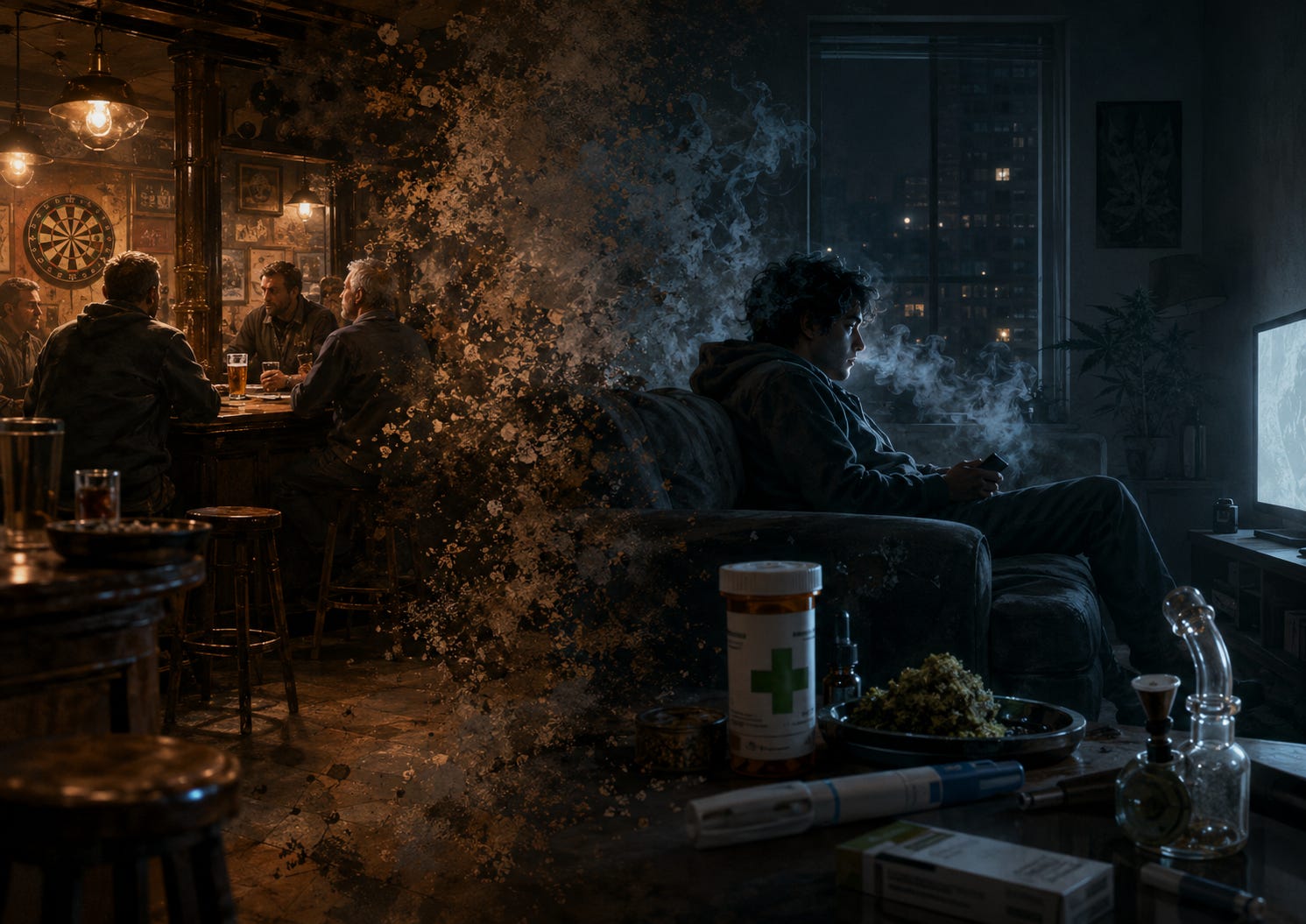
America is not simply changing what it uses to get intoxicated. It is moving from a largely social and intermittent drug culture toward one that is more habitual, more private, and increasingly commercially entrenched “Big Marijuana”. Alcohol still reaches more people, but marijuana is becoming the steadier presence in daily life.
“While far more Americans drink overall — including occasional drinkers — marijuana users are overwhelmingly more likely to have a regular habit” per SAMHSA’s National Survey on Drug Use and Health]; the chart was assembled by Charles Fain Lehman Charles Fain Lehman of the Manhattan Institute.


Medical marijuana served for years as the nose under the tent. In Massachusetts and elsewhere, ballot initiatives and legislative campaigns framed access around glaucoma, chronic pain, or anxiety that supposedly only cannabis could treat. Once the medical regime was entrenched, the jump to widespread recreational use became almost administrative. The “medical” justification faded; the commercial product remained, stronger than before: a growth industry with stores everywhere and lobbyists somewhere.
Potency rose roughly fourfold over the same decades that frequent use exploded. Modern commercial cannabis is not the plant of earlier generations. Higher THC changes the risk of dependence, cognitive impairment, and motivational blunting—points Alex Berenson and others have documented at length.
COVID added an accelerant. During the 2020–2021 lockdowns, a meaningful share of existing cannabis users increased frequency (citing boredom, stress, isolation, and easier at-home access; and saloons shut down) while some surveys recorded short-term rises in days of use. Alcohol showed a split pattern of higher home drinking and collapsed social consumption (obviously). Those pandemic bumps largely faded, yet the steeper multi-year climb in near-daily marijuana use continued— confirming that legalization, commercialization, and rising potency remain the dominant long-term forces.
The social texture of the substances matters as much as the chemistry. Alcohol, for all its well-known costs (addiction, liver disease, accidents) has long functioned as a social “technology”. Pubs and bars were places where working men found jobs, played darts, and maintained masculine bonds. My friend Robin Pickett, a working-class bard with a following in the UK, describes the disappearance of that atmosphere in neighborhoods like Whitechapel. The pubs emptied; the informal networks that once connected people to blue-collar work thinned. Demographic change (to Islam) plays a role (per Noah Carl; Aporia) ;
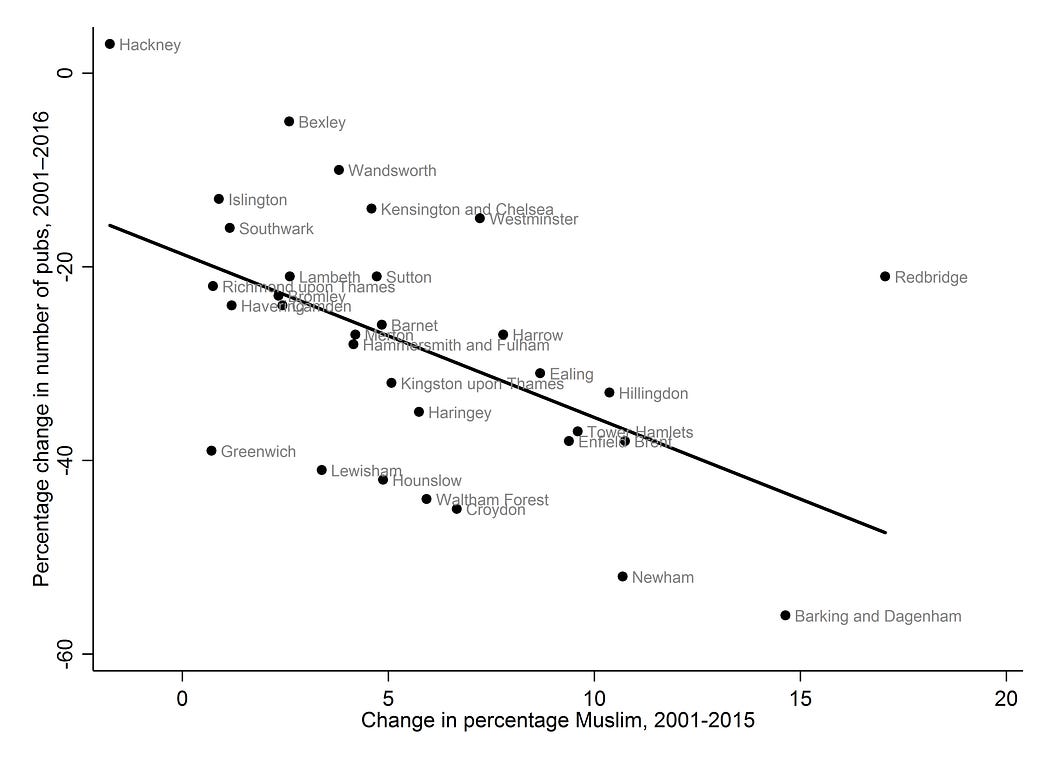
but the larger pattern is the same on both sides of the Atlantic: the old social intoxicant is giving way to a more solitary one.
One might hope commercial interests could recreate a social cannabis culture — marijuana lounges or bars that restore something of the old pub atmosphere. Hookah bars already demonstrate that a smoking ritual can sustain public gathering places, and with enough capital behind “Big Marijuana” such venues could theoretically appear. Yet the traditional pub’s business model rests on a pharmacological quirk that cannabis and most other sedatives lack: alcohol is a diuretic. It pulls water through the kidneys, leaving the drinker thirstier after consumption than before. One drink creates the desire for the next, stretching the social encounter over hours. THC (or a benzodiazepine) produces neural slowing without that feedback loop. A cannabis tincture or infused drink tends to satisfy rather than stimulate further consumption; the session ends when the dose is taken. This difference helps explain why cannabis gatherings have historically resembled opium dens more than pubs — clusters of people zoning out together rather than a prolonged, self-reinforcing social ritual. The drug’s chemistry shapes not only the individual experience but the texture of the social world it creates.
So for now and the foreseeable future, cannabis use leans private or small-group. It soothes rather than disinhibits. Combined with the concurrent rise of GLP-1 drugs that further suppress alcohol desire (approximately 11% of U.S. adults currently take them), the result is a quieter, more atomized form of intoxication.
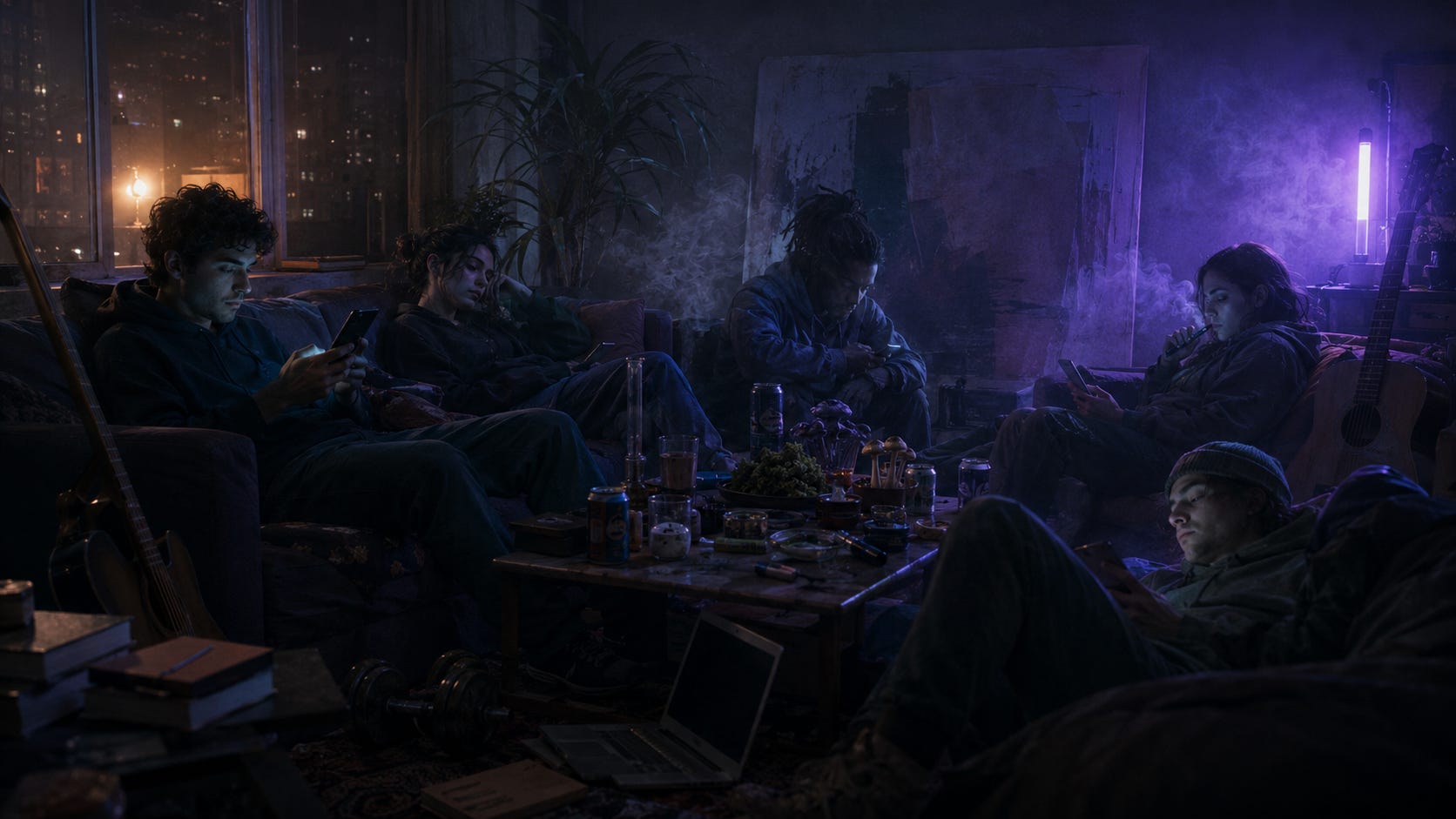
Younger cohorts already prefer weed and psychedelics. The net effect is a culture more docile and more content with mediocrity (feel free to argue this point). Alcohol’s harms are real and large; yet we are substituting one set of costs for another while the social infrastructure that once accompanied drinking erodes. The medical gateway, the potency surge, the solitary pattern of use, and the concurrent pharmaceutical shifts all point in the same direction. The consequences for relationships, male social capital, and everyday motivation are only beginning to register.